
Electronic Receipt: A Guide for Retailers and Service Providers to the New System
What Is an Electronic Receipt and Why Did the Government Introduce It?
 Tamer mohamednosair - • Tax services and everything related to taxes
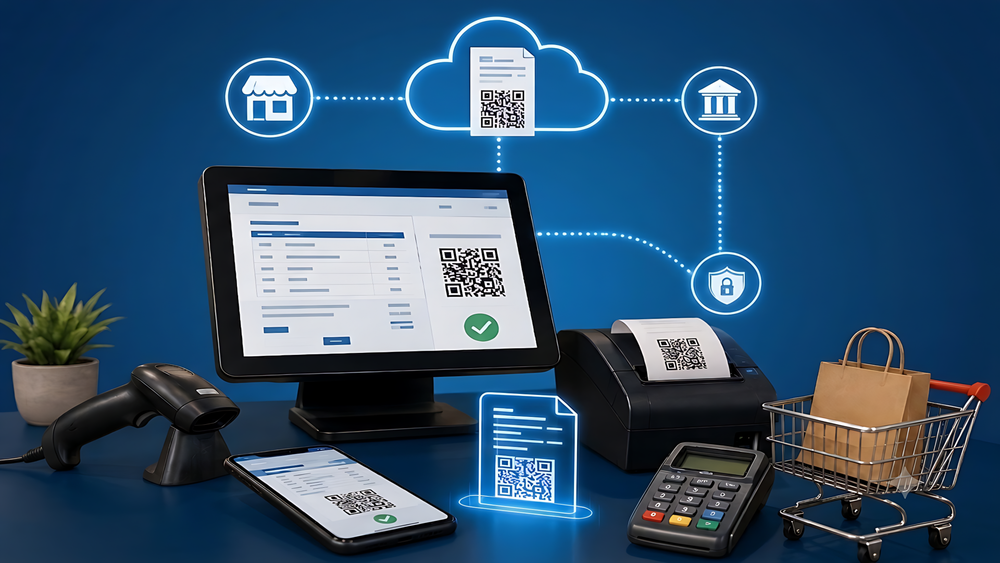
Electronic Receipt: A Guide for Retailers and Service Providers to the New System
After the Egyptian Tax Authority established the Electronic Invoicing System for business-to-business transactions, the Electronic Receipt System was introduced to cover the final link in the revenue cycle: sales to the final consumer.
Simply put, the Electronic Receipt System means that every retail transaction — whether in a store, pharmacy, restaurant, or chain of outlets — is documented in near real time with the Egyptian Tax Authority through point-of-sale devices.
Based on ECPA's 26 years of experience serving more than 1,270 clients across retail, services, and other sectors, this guide explains what the system is, how it differs from electronic invoicing, the requirements for connecting your point-of-sale system, and how to prepare your business before the mandatory implementation reaches you.
What Is an Electronic Receipt and Why Did the Government Introduce It?
An Electronic Receipt is a digital document that records the sale of goods and services to the final consumer (B2C).
It is issued through a point-of-sale device or software connected to the Egyptian Tax Authority's system. The data of each transaction is transmitted to the Tax Authority when the sale is completed, and the receipt receives a unique identification number that allows the consumer to verify it.
The objectives of introducing the system are aligned with those of electronic invoicing:
Capturing actual retail sales, historically one of the less transparent areas of the economy.
Achieving greater tax fairness between compliant businesses that report their sales and those that do not.
Gradually integrating the informal economy into the formal economy.
Building a real-time database that enables the Tax Authority to conduct risk-based audits instead of comprehensive inspections.
Electronic Receipt vs. Electronic Invoice
Many business owners confuse the two systems. In reality, they are complementary components of the digitalization of business revenues.
Comparison | Electronic Invoice | Electronic Receipt |
|---|---|---|
Nature of transaction | Business-to-business / entities (B2B) | Sales to final consumers (B2C) |
Buyer information | Tax-registered and identified | Usually a final consumer without tax registration |
Issuance method | ERP / invoicing software / system portal | POS devices and software connected to the Tax Authority |
Authentication | Company electronic seal and unique UUID | Real-time device integration and receipt verification number |
Other party's interaction | Buyer may accept or reject the invoice | Consumer can verify the receipt without an acceptance cycle |
Main tax impact | Important for input VAT deduction | Real-time evidence of taxable retail revenues |
Who Is Covered by the System and When?
The Electronic Receipt System targets businesses that sell directly to final consumers, including:
Retail chains
Restaurants and cafés
Pharmacies
Clothing stores
Electronics and appliance stores
Service providers dealing with the general public
Other B2C businesses
Implementation is taking place in successive phases, with different categories being required to comply according to the latest instructions issued by the Egyptian Tax Authority.
The implementation initially focused on major chains and larger businesses and is gradually expanding to smaller businesses.
We recommend that business owners do not wait until they are officially included in a mandatory phase. Preparing early gives the business enough time to select the appropriate technology, test the system, and train employees without the pressure of approaching deadlines.
Requirements for Connecting Point-of-Sale Systems
Technical integration is the heart of the system and requires planning according to the size of the business and number of branches.
The main requirements include:
1. Compatible POS System
A point-of-sale device or software that meets the requirements of the Egyptian Tax Authority, whether a physical POS terminal or a cloud-based cashier system.
2. Registering Each Device
Every POS device must be registered with the system so that it has an identifiable digital identity and every receipt can be attributed to the device that issued it.
3. Stable Internet Connection
Each outlet should have a reliable internet connection, along with a mechanism for handling connectivity interruptions and resending pending receipts once the connection is restored.
4. Product Coding
Products must be properly coded, with the applicable VAT treatment configured at the item level in accordance with VAT Law No. 67 of 2016.
5. Integration with Accounting / ERP
The POS system should be connected to the accounting system or ERP so that sales data does not become an isolated source of information separate from the accounting records.
How Are Electronic Receipts Sent in Real Time?
When a sale is completed, the POS device sends the receipt information — including:
Products
Values
Taxes
Payment method
to the Electronic Receipt System in near real time.
The system validates the information and assigns the receipt a number that can be verified by the consumer.
This gives the Egyptian Tax Authority an accurate daily picture of the business's revenues — and that same picture should reconcile with your accounting records and tax returns.
Impact of the System on Accounting Records and VAT
This is where the subject moves from being purely technical to becoming fundamentally accounting-related, which is an important focus of our work with clients.
Elimination of Revenue Gaps
Any difference between sales reported through the system and the VAT return may become visible to the Tax Authority.
Therefore, tax returns should be prepared using data that reconciles with the electronic receipt system.
Better Cash and Cashier Control
Real-time integration requires daily procedures to reconcile cash and electronic payment methods with receipts issued during each cashier shift.
Returns and Discounts
Returns and discounts should be processed through the system using documented procedures rather than manual adjustments to sales reports.
Accurate Product Master Data
An incorrect product code or VAT rate can be repeated thousands of times every day in a retail environment.
Therefore, reviewing the product master data from an accounting and tax perspective before going live is essential.
Improved Internal Controls
The system provides management and auditors with real-time sales data for each branch, making it a powerful tool for detecting revenue leakage and irregularities at an early stage.
A Practical Preparation Plan for Stores and Retail Chains
1. Inventory Your Sales Outlets
Identify all sales locations and existing cashier/POS devices and evaluate whether they comply with the system's requirements.
2. Review Your Tax Status
Review your tax registration and VAT status and update your information with the relevant tax office.
3. Build a Standardized Product Master
Create a unified, properly coded product master and have it reviewed from an accounting and tax perspective before implementation.
4. Select the Appropriate POS Solution
Choose the appropriate POS solution and conduct a pilot integration before rolling it out across all branches.
5. Establish Daily Reconciliation Procedures
Reconcile electronic receipts with cash, electronic payments, and accounting records for every cashier shift.
6. Train Cashiers and Supervisors
Train your teams on issuing receipts, processing returns, and handling situations where the internet connection is interrupted.
7. Prepare a Monthly Reconciliation Report
Establish a monthly procedure to reconcile the system's data with the VAT return before submitting it.
How Can ECPA Help You Transition to the Electronic Receipt System?
At ECPA, led by Mr. Ashraf Hagar, registered as an account auditor with the Financial Regulatory Authority, we provide an integrated service for retail and service businesses.
Our services include:
Assessing tax and technical readiness
Product coding
Supervising POS integration with the Electronic Receipt System
Connecting POS systems with accounting and ERP solutions such as Odoo, Zoho, and Capital
Designing daily reconciliation procedures
Establishing monthly reconciliation processes
Training branch teams
Our goal is to turn compliance from a daily burden into an automated system that gives you better control and visibility over your revenues.
Frequently Asked Questions
What is the main difference between an Electronic Receipt and an Electronic Invoice?
An Electronic Invoice documents transactions between businesses and requires information identifying the registered buyer and electronic authentication.
An Electronic Receipt documents sales to the final consumer through POS systems connected to the Egyptian Tax Authority in real time.
Is my business currently required to join the Electronic Receipt System?
Implementation is being carried out in phases, with businesses being required to comply according to the latest instructions and decisions issued by the Egyptian Tax Authority.
Therefore, review the regulations applicable to your business or consult your tax advisor.
Do not wait until mandatory implementation begins before preparing your business.
What happens if the internet connection is interrupted during a sale?
Compatible solutions provide mechanisms for temporarily storing receipts and resending them once the internet connection is restored.
The important thing is to ensure that your system supports this functionality and that your employees are trained on the appropriate procedure.
Can multiple branches and cashier devices be connected to the system?
Yes.
Devices can be registered with the system so that each receipt is associated with its specific device and branch.
This also gives management real-time visibility into the performance of each sales outlet.
How does the Electronic Receipt System affect my tax returns?
Your sales data becomes available to the Tax Authority in near real time.
Therefore, VAT returns should be prepared based on data that reconciles with the Electronic Receipt System. Any unexplained discrepancy may result in inquiries or a tax inspection.
Prepare Your Sales Outlets for the Electronic Receipt System with ECPA
Whether you operate a single store or a chain of branches, our team can develop a complete transition plan tailored to the size and budget of your business.
Contact ECPA – Egyptian CPAs today and start preparing before the mandatory deadlines instead of rushing to meet them.