
Establishing a company in Dubai
Establishing a company in Dubai tops the expansion options for Egyptian entrepreneurs, thanks to Dubai’s position as a commercial and logistics hub connecting Asia, Africa, and Europe, as well as its business environment that allows 100% foreign ownership across a wide range of activities. However, the real question is not “Should I establish a company in Dubai?” but rather “Which structure should I choose?” The choice between a mainland company and a free-zone company determines the scope of your activities, your costs, and your relationship with banks for years to come.
 Waleed Ali - • Information about Legal advice and incorporation work
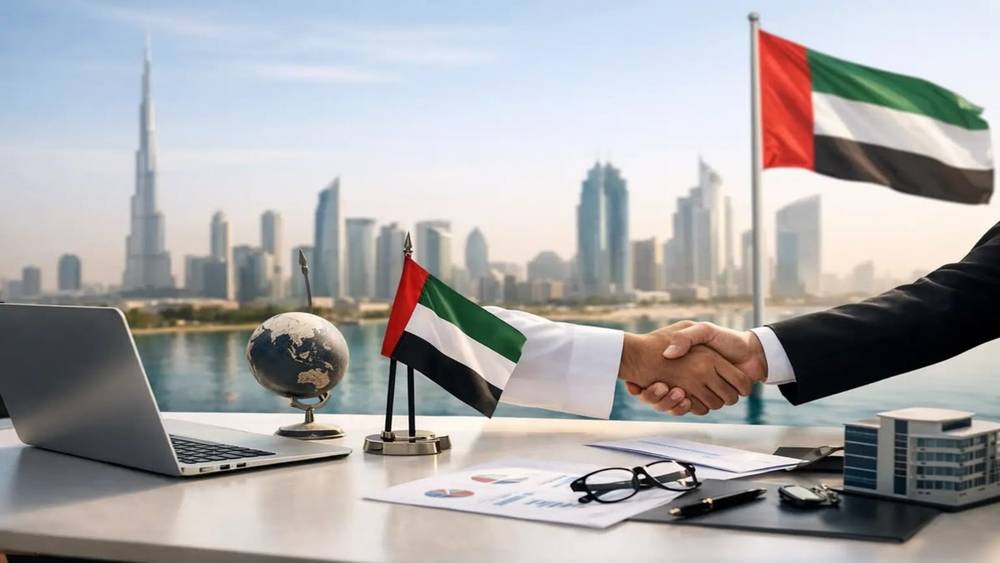
Establishing a company in Dubai
Establishing a company in Dubai tops the expansion options for Egyptian entrepreneurs, thanks to Dubai’s position as a commercial and logistics hub connecting Asia, Africa, and Europe, as well as its business environment that allows 100% foreign ownership across a wide range of activities. However, the real question is not “Should I establish a company in Dubai?” but rather “Which structure should I choose?” The choice between a mainland company and a free-zone company determines the scope of your activities, your costs, and your relationship with banks for years to come.
Based on our extensive regional experience across Egypt, Saudi Arabia, and the UAE over 26 years, we provide in this guide a practical decision-making framework for Egyptian investors, away from marketing promises.
Mainland or Free Zone? A Decision-Making Framework
This is the fundamental choice when establishing a company in the UAE, particularly in Dubai. Mainland companies are generally licensed by the relevant Department of Economy in the emirate, while free-zone companies are licensed by the authority governing the respective free zone. Each route has its own operational framework:
Comparison | Mainland | Free Zone |
|---|---|---|
Licensing Authority | Department of Economy in the emirate | Relevant Free Zone Authority |
Ownership | 100% foreign ownership is permitted across a wide range of activities, with exceptions for certain strategic activities | 100% foreign ownership under the free-zone framework |
Business Scope | Direct dealings with the local market and government entities without an intermediary | Activities within the free zone and exports; sales in the local market are generally conducted through a distributor or under a licensed arrangement |
Office | A documented physical office lease is generally required | Flexible options ranging from flexi-desk offices to dedicated offices, depending on the package |
Visas | Linked to office space and business activity | A specific visa quota is included in the package and may be increased subject to certain conditions |
Banking | Generally accepted; physical presence can facilitate the account-opening process | Accepted, although certain activities and structures may be subject to enhanced due diligence |
The practical rule we apply with our clients: If your end customer is located within the UAE market, a mainland company is generally more suitable. If your business is export-oriented, service-based, or digital and targets customers outside the UAE, Dubai free zones may offer greater cost efficiency and faster procedures.
These requirements may change according to the latest regulations, so verification with the relevant authority or free-zone authority is essential before making a commitment.
Choosing the Right Free Zone for Your Business
There is no single “best free zone” for everyone. This is the first misconception we correct when someone considers establishing a company in the UAE based on a casual recommendation.
Dubai’s free zones are specialized by nature. Some focus on trade and logistics, others on media and technology, while others cater to professional and financial services.
We recommend evaluating each option based on the following:
Is the intended business activity already included among the activities licensed by the free zone?
What is the visa quota associated with the package, and is it sufficient for your hiring plan?
What are the physical office requirements, and does the authority accept flexible office arrangements for your activity?
What is the free zone’s reputation among local banks when opening corporate accounts?
Are there mandatory annual audit requirements for renewing the license?
General Licensing and Incorporation Steps
The exact procedures differ between the mainland and each free zone, but the general process for establishing a company in Dubai usually involves the following stages:
Precisely define the business activity and select the appropriate legal form and jurisdiction.
Reserve the trade name and obtain initial approval from the licensing authority.
Prepare the founders’ documents, usually including passports, CVs, and, in some cases, certified and translated documents relating to the Egyptian parent company.
Sign the Memorandum of Association and Articles of Association according to the licensing authority’s approved template.
Secure the premises: a documented office lease for mainland companies, or an office package within the free zone.
Obtain the business license, then open the corporate bank account and issue investor and employee visas.
Obtaining Additional Approvals
Certain activities—such as financial, healthcare, education, and food-related services—require approvals from additional regulatory authorities before the license can be issued.
Ignoring this point during the planning stage can lead to unexpected delays in your launch schedule. We therefore always recommend verifying these requirements during the business activity assessment stage, rather than after paying the fees.
Cost of Establishing a Company in Dubai: Components, Not Fixed Figures
We deliberately avoid quoting fixed figures here because any absolute number can be misleading.
The cost of establishing a company in Dubai varies depending on the free zone, business activity, number of visas, and type of office, and packages are periodically updated.
As an investor, what matters is understanding the components of the cost so that you can build a realistic budget:
License and registration fees: Paid to the licensing authority upon incorporation and generally renewed annually.
Premises costs: A physical office lease in the mainland, or a flexible/dedicated office package in a free zone.
Visas: A cost applies to each visa and typically includes issuance, medical examination, Emirates ID, and health insurance.
Capital: Certain activities or authorities may require a minimum capital amount or proof of deposit, while others do not.
Professional costs: Certification, certified translation, legal consultancy, and accounting services.
Ongoing costs: Annual renewal, bookkeeping, auditing where required, and tax returns.
The most common mistake we see is calculating only the first-year setup cost while overlooking operating and renewal expenses. After twelve months, the company is then faced with a bill that was never included in the financial model.
Overview of the UAE Tax Landscape
The UAE tax landscape has changed significantly in recent years, and the old perception of the UAE as a “tax-free country” is no longer accurate.
Federal Corporate Tax: The UAE introduced a corporate tax on business profits at a rate of 9%, generally applying to taxable income exceeding a specified threshold. There is also a potential special treatment for a Qualifying Free Zone Person when precise conditions are met. Determining whether your company qualifies is a technical matter that requires professional assessment on a case-by-case basis.
Value Added Tax (VAT): VAT is imposed at 5%, with mandatory and voluntary registration thresholds, as well as invoicing and periodic filing obligations.
Personal Income Tax: The UAE does not impose personal income tax on individuals, which remains a genuine attraction for professionals and talent.
This is a simplified overview. Details, thresholds, and conditions may change according to the latest regulations. Consulting the Federal Tax Authority or a qualified tax advisor is essential before making any tax assumptions in your financial model.
Banking and Economic Substance: Surprises for New Entrants
Many founders assume that obtaining a business license automatically means obtaining a bank account. In reality, this is not the case.
UAE banks apply Know Your Customer (KYC) and Anti-Money Laundering (AML) procedures rigorously and may request:
A clear business plan and information about expected customers and suppliers and their countries.
Proof of physical presence, such as an office lease and, in some cases, management presence in the UAE.
Founders’ documents, professional backgrounds, and source-of-funds documentation.
Contracts or initial invoices supporting the legitimacy and seriousness of the business activity.
Economic Substance Requirements
Certain entities carrying out specific activities may be subject to Economic Substance Requirements, which may involve notifications, periodic reporting, and evidence of actual management and activities within the UAE.
Not every company is subject to these requirements. However, assuming that they do not apply without conducting an assessment can create unnecessary risks.
We recommend reviewing whether the requirements apply to your specific business activity with a qualified advisor at an early stage.
Ongoing Accounting and Audit Obligations
Companies in the UAE should maintain proper accounting records and supporting documents for specified periods. Many companies—depending on their legal form and licensing authority—may also be required to prepare financial statements audited by a licensed auditor. Some free-zone authorities may require audited financial statements as part of the license renewal process.
In practice, this means:
Maintaining proper books from day one, rather than waiting until the end of the financial year.
Clearly separating the accounts of the UAE company from those of the Egyptian entity, while properly documenting any transactions between the two.
Monitoring VAT registration thresholds and filing deadlines.
Preparing for Corporate Tax through records that support taxable income and relevant tax adjustments.
Frequently Asked Questions
Can an Egyptian own 100% of a company in Dubai?
Yes, in free zones, 100% foreign ownership is permitted under the applicable free-zone framework. In the mainland, 100% foreign ownership is permitted across a wide range of activities, with exceptions for certain activities of strategic importance.
The applicable lists may change under the latest regulations, so the specific business activity should be verified with the relevant Department of Economy.
How much does it cost to establish a company in Dubai?
There is no single correct figure. The cost varies depending on the free zone, business activity, number of visas, office type, and any capital requirements.
We recommend obtaining updated official quotations from the relevant licensing authority or free-zone authority and preparing a budget that includes annual renewal and operating expenses—not just the initial setup cost.
Do I need a physical office?
For mainland companies, a documented office lease is generally required. In free zones, options vary from flexible office arrangements to dedicated offices depending on the package and number of visas.
With increasingly stringent banking procedures and economic substance considerations, a reasonable physical presence has become a supporting factor rather than simply an additional burden.
Are free-zone companies subject to Corporate Tax?
Companies are generally subject to the UAE Federal Corporate Tax regime, with potential special treatment for a Qualifying Free Zone Person when specific conditions relating to the nature of income and activities are satisfied.
Determining the applicable tax treatment requires a technical review of your specific circumstances and consultation with a qualified advisor before relying on any assumption.
What is the difference between establishing a company in Dubai and opening a branch of my Egyptian company?
A newly incorporated company is a separate legal entity with limited liability, while a branch is legally an extension of the parent company, which remains responsible for its activities and obligations.
This choice affects the required documentation, tax treatment, and banking acceptance. It is a decision that should be evaluated individually for each client before taking any action.
Start Your UAE Expansion with ECPA’s Regional Expertise
Our advantage at ECPA is that we operate where you operate: with practical experience in Egypt, Saudi Arabia, and the UAE, and 26 years of experience serving more than 1,270 clients across 14 different sectors, led by Ashraf Hagar, registered as an auditor with the Financial Regulatory Authority.
We accompany you from Cairo throughout every stage of establishing your company in the UAE. We help you evaluate the mainland versus free-zone options, prepare your Egyptian entity’s documents and financial statements for the incorporation file, and build your accounting and control system to comply with Corporate Tax, VAT, and audit requirements from day one.
Contact us today to build your UAE market-entry plan with confidence and clarity.