
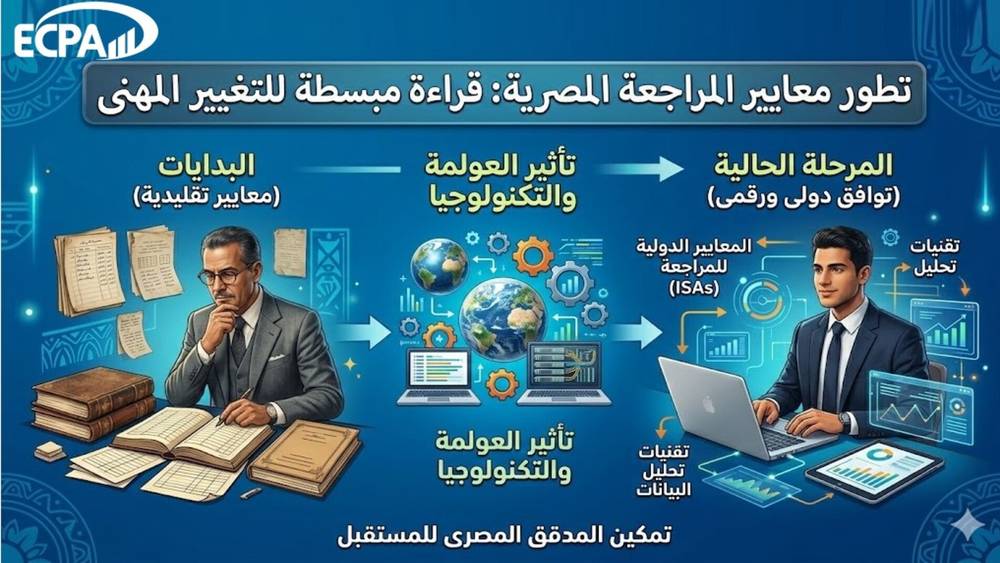
The Development of Egyptian Auditing Standards: A Simplified Reading of Professional Change
In October 2025, the Egyptian Auditing Standards witnessed a fundamental update reflecting a significant shift in the philosophy of auditing and its practical application. The new release no longer focuses solely on compliance with formal procedures; instead, it has moved toward a broader concept based on comprehensive quality management, risk management, and strengthened professional governance.
 Amer Ibrahim - • External audit and audit
Key Features of the Change
Quality Management Instead of Quality Control:
Quality is now viewed as a continuous process that begins with client acceptance and extends through to the issuance of the audit report, rather than being a subsequent review of procedures
Risk Management Approach:
Greater emphasis is placed on identifying and assessing engagement-related risks, and linking audit planning and execution to the results of that assessment
Role of the Engagement Partner:
The partner’s role is no longer merely supervisory. The engagement partner is now a true leader of quality, responsible for independence, ethics, and guiding the audit team
Client Acceptance and Continuance:
This has become a dynamic process requiring periodic reassessment of management integrity and the entity’s ability to comply with professional standards.
Engagement Letter:
It is now a comprehensive professional document defining management responsibilities, the applicable financial reporting framework, the nature of the audit report, and mutual obligations.
Independence and Ethics:
There is a mandatory requirement for ongoing assessment of threats to independence, along with appropriate safeguards and proper documentation
Professional Documentation:
Documentation requirements have expanded to include significant professional judgments, risk assessment results, and technical consultations.
Engagement Quality Review:
An independent review mechanism is required for high-risk engagements, and the audit report cannot be issued until this review is completed.
Governance and Communication:
The role of those charged with governance has been strengthened to support the quality of financial reporting and enhance transparency.
Implications of the Change
These amendments reflect the profession’s transition from a traditional compliance-based model to a modern framework centered on quality management, risk management, and governance. This shift is expected to enhance the quality of audit engagements and strengthen confidence in financial reports.
Conclusion
The issuance of the updated standards represents a strategic step toward reshaping professional practice in Egypt in alignment with global trends. It reinforces the efficiency of the profession and its role in promoting transparency and safeguarding the economy.